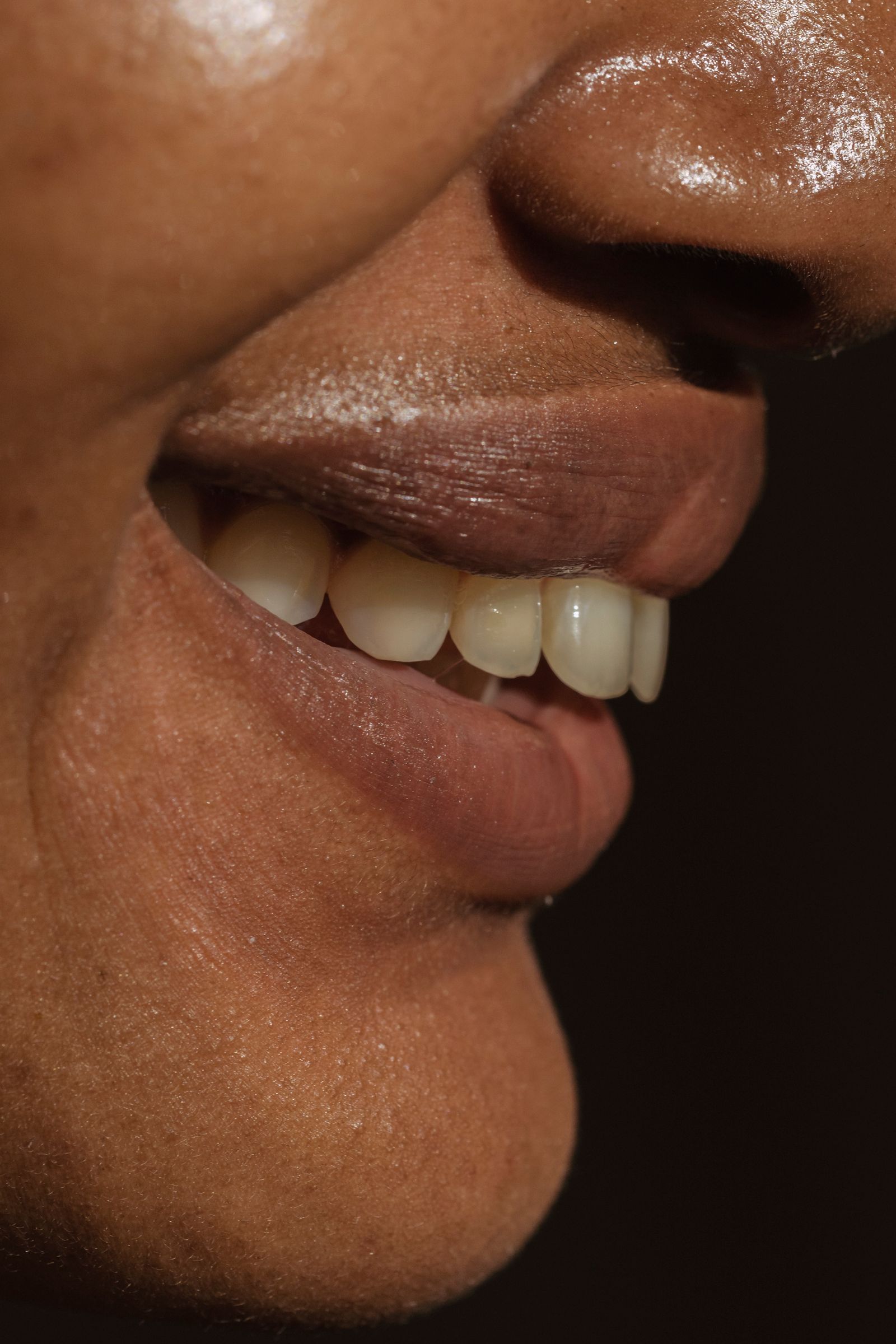
Whitening science
Why Peroxide Sessions Can Feel Sensitive: Diffusion and Temporary Pulp Responses
Hydrogen peroxide can diffuse through enamel and dentin. Named studies document temporary pulp responses and sensitivity pathways.
Dr. Dave Steuer, D.M.D., Ph.D. · November 1, 2026 · 4 min read
How peroxide moves and why sensitivity appears
Tooth whitening with peroxide gels works by oxidizing organic chromogens. The same small molecules that reach stain also move inward. Enamel is porous at the micro scale; dentin is more permeable. Once peroxide or its reactive species cross the dentin-enamel junction, they can arrive at the pulp chamber.
A 2021 study in Scientific Reports examined this pathway directly. Chen and colleagues applied 15 % and 40 % bleaching gels to enamel-dentin discs with dental pulp stem cells on the dentin side. The abstract states: "Hyperalgesia has become a major problem restricting the clinical application of tooth bleaching. We hypothesized that transient receptor potential ankyrin 1 (TRPA1), a pain conduction tunnel, plays a role in tooth hyperalgesia and inflammation after bleaching." They found dose-dependent rises in intracellular reactive oxygen species, calcium, and ATP, plus increased expression of TRPA1, PANX1, TNF-α, and IL-6. A TRPA1 inhibitor reduced those changes. In rats, immunohistochemistry showed elevated TRPA1 and PANX1 protein after gel application. The paper concludes that TRPA1 "plays a critical role in sensitivity and inflammation after tooth bleaching."
This is a laboratory and animal finding, not a clinical trial of any specific product. It does not prove that every short session produces inflammation, nor does it claim the response is permanent. It does show a plausible mechanism: peroxide reaches pulp cells, activates a known pain channel, and triggers inflammatory mediators.
A 2024 systematic review of in vivo studies (Donato et al., International Endodontic Journal) examined histological effects. Of 30 eligible papers, 18 animal studies reported moderate-to-strong inflammatory responses in the superficial pulp, with cell disorganization and necrotic areas, especially after 35–38 % hydrogen peroxide for 30–40 minutes. In 11 human-tooth studies, five of seven that looked at inflammation observed significant changes. Tertiary dentine deposition was noted in most longer-term assessments after high-concentration gels. The authors conclude that high-concentration gels increase inflammatory response and necrosis in the short term, mainly in rat molars and human incisors, plus greater hard-tissue deposition later. Again, these are high-concentration, longer-contact protocols. Lower-concentration, shorter-contact regimens are not equivalent.
An umbrella review published in Frontiers in Oral Health in 2026 synthesized 18 systematic reviews on interventions for bleaching-induced sensitivity. Its abstract notes: "Bleaching-induced tooth sensitivity is common but usually transient." Systemic NSAIDs showed no clinically meaningful preventive effect. Potassium-nitrate approaches produced small reductions in intensity; effects on incidence were inconsistent. Most interventions reduced intensity more than they prevented the sensation altogether. The review underscores that sensitivity is frequent yet typically short-lived.
A 2025 paper (Eric et al., Journal of Dentistry) linked peroxide exposure to enamel changes that may help explain clinical sensitivity. After 30 % hydrogen peroxide incubation, enamel microhardness declined, surface area increased, and average pore size decreased. Proteins from treated teeth adopted altered conformations. The authors write that these porosity and protein changes "could help explain clinical complications observed with these treatments such as increased sensitivity."
The studies cited below indicate that peroxide can reach the pulp, activate sensory and inflammatory pathways, and produce temporary sensitivity. Higher concentrations and longer contact times increase the magnitude of pulp responses in the studies above. Short, completed sessions (ten minutes) with lower-concentration gels reduce cumulative exposure compared with repeated high-concentration in-office visits. Sensitivity that appears is usually transient; it is not evidence that the session has permanently altered the tooth or that the protocol has failed.
Restorations, exposed root surfaces, and pre-existing dentin hypersensitivity can amplify the sensation because they alter the pathway length or baseline nerve excitability. Anyone with spontaneous pain, swelling, or sensitivity that persists beyond a few days should see a dentist before continuing any whitening protocol. This article is general information, not dental advice.
What the research does not show
None of the papers above claim that blue light improves peroxide efficacy. Sensitivity risk varies with concentration, contact time, and individual factors. The TRPA1 work used 15 % and 40 % gels on discs and rat incisors. The histological review focused on high-concentration protocols. The umbrella review found most desensitizing interventions modest at best. Shade change still depends on the amount and type of chromogen present and on habits after the session.
Pellicle reforms, dietary chromogens re-bind, and bacterial margin lines remain mechanical. Completing the ten-minute session and then clearing the surface with ordinary brushing and rinsing supports both comfort and the new shade position. Sensitivity that limits compliance is a reason to shorten contact or pause, not a reason to abandon mechanical hygiene.
Practical takeaway
Peroxide diffusion is real. Temporary pulp responses are documented. Sensitivity is common and usually brief. Short sessions limit cumulative exposure. If a session produces a zinger, stop, rinse, and reassess; persistent pain belongs with a clinician. The research supports informed use, not risk-free claims.
References
- Chen C, Huang X, Zhu W, Ding C, Huang P, Li R. TRPA1 triggers hyperalgesia and inflammation after tooth bleaching. Scientific Reports. 2021;11(1):17418. https://doi.org/10.1038/s41598-021-97040-w https://pubmed.ncbi.nlm.nih.gov/34465829/
- Donato MV, Dos Reis-Prado AH, Abreu LG, et al. Influence of dental bleaching on the pulp tissue: a systematic review of in vivo studies. International Endodontic Journal. 2024;57(6):630-654. https://doi.org/10.1111/iej.14061 https://pubmed.ncbi.nlm.nih.gov/38470103/
- Kurmanalina MA, Tankibayeva ZG, Sagimbayeva TB, et al. Interventions for bleaching-induced tooth sensitivity: an umbrella review. Frontiers in Oral Health. 2026;7:1927686. https://doi.org/10.3389/froh.2026.1927686 https://pubmed.ncbi.nlm.nih.gov/42835010/
- Eric J, Ciobanu O, Abdallah MN, et al. The effect of hydrogen peroxide treatments on dental enamel porosity and protein structure and its long-term implications on tooth hardness and optical properties. Journal of Dentistry. 2025;156:105714. https://doi.org/10.1016/j.jdent.2025.105714 https://pubmed.ncbi.nlm.nih.gov/40132790/
References
- [1] TRPA1 triggers hyperalgesia and inflammation after tooth bleaching
- [2] Influence of dental bleaching on the pulp tissue: A systematic review of in vivo studies
- [3] Interventions for bleaching-induced tooth sensitivity: an umbrella review
- [4] The effect of Hydrogen Peroxide treatments on dental enamel porosity and protein structure and its long-term implications on tooth hardness and optical properties
This page is educational and is not a substitute for individual dental advice. Consult your dentist before whitening if you have untreated decay, active gum disease, or extensive restorations on visible teeth.